Home › Road, Street, and Municipal Paving
We handle road paving in Tucson, AZ for private communities, commercial campuses, and municipal agencies. Our team manages milling, base work, and asphalt placement for new streets and overlays. With efficient traffic control and coordination, we keep residents and drivers moving while delivering a smooth, long lasting roadway.
Precision Asphalt Tucson provides professional road paving throughout Tucson, AZ, Arizona and the surrounding area. Our licensed, insured crew delivers safe, clean, on-time work with a free estimate before anything begins. Call (520) 900-1515 or request your free quote.
Road, Street, and Municipal Paving Built for Tucson Conditions
Road paving in Tucson is not the same as in cooler or wetter parts of the country. Extreme summer heat, sudden monsoon storms, and caliche-heavy soils are hard on asphalt and base layers. Precision Asphalt Tucson designs every road, street, and municipal paving project around these exact conditions so your pavement holds up instead of unraveling in a few years.
We focus on how the roadway will actually be used. Neighborhood streets, collector roads, industrial access routes, and emergency vehicle lanes all need different pavement structures. Before we price or design a job, we look at traffic volume, truck percentages, turning movements, nearby drainage patterns, and existing failures like rutting or alligator cracking. That field evaluation drives the thickness, mix design, and drainage plan for your project.
Because we are local, we know how Tucson asphalt mixes behave on a 110-degree day, how quickly they cool in evening shade, and how poor drainage during a monsoon can destroy a road edge in a single season. Our crews schedule paving windows, compaction passes, and striping to fit those realities, not a generic manual written for some other climate.
Our Road Paving Process from Evaluation to Final Roll
Every road, street, and municipal paving job with Precision Asphalt Tucson follows a clear, step-by-step process so you know what is happening and when.
1. Site assessment and core sampling: We start by walking the full length of the road, documenting cracks, depressions, drainage issues, and traffic patterns. For existing roads, we often recommend core samples to measure current asphalt thickness and base quality. This tells us whether you only need milling and resurfacing or a deeper rebuild.
2. Design and specification: Based on the findings, we design the pavement structure. For a light residential street, that might be a compacted aggregate base with 2 to 3 inches of asphalt. For bus routes or industrial areas, we may specify thicker asphalt lifts or a stiffer mix with higher quality aggregates. If you are a municipality, we align the design with your current standard details and specifications.
3. Subgrade and base preparation: Tucson soils can shift and swell, especially where old irrigation or poorly compacted fill exists. We shape and compact the subgrade, then install or repair the aggregate base. In soft areas, we may use geotextile fabric or thicker base rock to bridge weak spots. This is where many cheap bids cut corners, but it is what keeps your road from forming potholes after the first monsoon.
4. Milling, leveling, and profile: On overlays, we mill off the top layer of existing asphalt to a set depth to tie in with curb, gutter, and driveways. We then place a leveling course where needed to eliminate low spots and restore proper cross slope so water runs off the pavement rather than sitting in ruts.
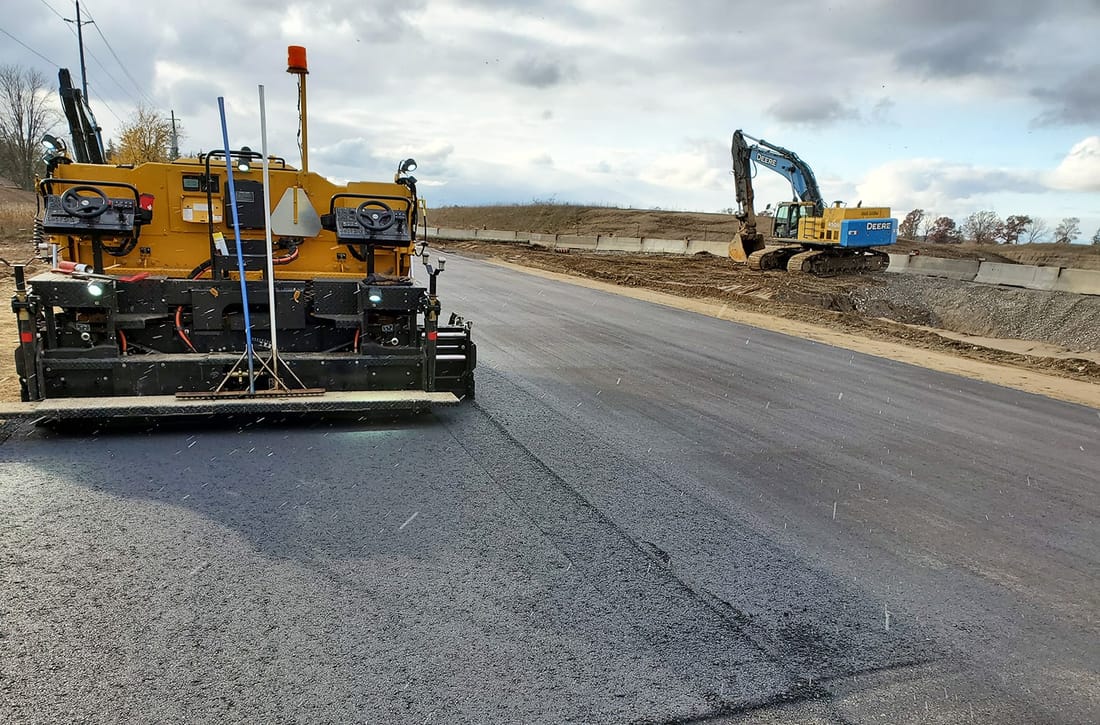
5. Asphalt placement and compaction: Asphalt is delivered at specific temperatures and placed in one or more lifts using pavers that control thickness and smoothness. Our roller operators follow a compaction pattern matched to the mix design and ambient temperature. In Tucson heat, timing matters: if the mix cools too fast, you lose density and shorten pavement life.
6. Finish work and quality checks: We complete transitions to driveways and intersections, adjust manholes and valve covers, and inspect for smoothness and proper drainage. Where required, we perform density testing and provide reports to municipal inspectors or project engineers.
Asphalt Mixes, Structures, and Options for Tucson Roads
Road paving is not just hot black material on the ground. The mix design and pavement structure determine how your road holds up under Tucson traffic and climate.
For neighborhood streets, we typically recommend a dense graded hot mix that balances cost and durability. In higher traffic corridors, we may use mixes with more angular aggregate and modified binders that resist rutting when temperatures reach triple digits. The Arizona Department of Transportation and the City of Tucson both have mix standards that work well in our region, and we design to be compatible with those when public agencies are involved.
Structural design matters just as much as the mix. A lightly traveled residential street that only occasionally sees delivery trucks can perform well with a thinner asphalt section over a properly compacted base. A road that serves as a bus route, fire access, or industrial park approach needs more total thickness and sometimes a stronger base material. Precision Asphalt Tucson calculates equivalent single axle loads and traffic categories instead of guessing so your pavement is not overbuilt or underbuilt.
You also have options in treatment type. In some cases, a full reconstruction is not necessary. A mill and overlay can remove failed surface material while preserving a solid base, cutting cost and project time. In other corridors, a structural overlay with a reinforcing fabric interlayer can extend the life of a cracked but still sound pavement. We discuss these options with you, explain the tradeoffs in lifespan and cost, and recommend what fits both your budget and long term plans.
Cost Drivers and How to Control Your Road Paving Budget
The cost of road paving in Tucson is driven by a handful of specific factors. Understanding these ahead of time helps you budget realistically and compare bids accurately.
Major cost drivers include pavement thickness, total project area, traffic control requirements, and how much underlying base work is needed. Haul distances for materials and millings also affect price. A street that needs deep excavation, base replacement, and utility coordination will cost more per square yard than a straightforward mill and overlay on an open stretch of roadway.
On public or semi-public streets, traffic control is often the surprise expense. Detours, flaggers, temporary striping, and working around peak travel times can add labor and equipment hours. Precision Asphalt Tucson plans phasing to keep residents, school traffic, or business access functioning while keeping control costs as low as practical. Night or early morning work in Tucson may raise labor costs slightly but can be cheaper overall if it shortens job duration and reduces traffic control complexity.
You can often control budget by grouping work. Rehabilitating several nearby streets, or combining a parking lot with adjacent access roads, can spread mobilization and traffic control costs across more square footage. Another way to manage cost is to time work before the pavement is completely failed. Once the base is damaged, you are paying for reconstruction instead of surface treatments or overlays. We provide pavement condition assessments so you can plan multi year budgets rather than reacting to emergency failures.
Common Road Problems in Tucson and How We Address Them
Tucson roads face a specific set of recurring problems: heat-related cracking, oxidation, edge failures from runoff, and rutting where heavy vehicles stop or turn. Precision Asphalt Tucson designs repairs and new work to prevent these issues as much as possible.
Alligator cracking and potholes usually signal base or subgrade issues. Simply patching the surface is a temporary fix. When we see these patterns, we cut out and excavate the failed area, repair and compact the base to proper density, then replace the asphalt in layers. For widespread failure, we recommend milling off the distressed asphalt and rebuilding the structure to an appropriate depth.
Longitudinal and transverse cracks often come from thermal movement and reflection from underlying layers. On resurfacing projects, we use crack sealing and sometimes reinforcing fabrics before placing new asphalt. This slows reflective cracking and extends overlay life, which is especially important in Tucson where temperature swings from day to night can be large.
Edge failures are extremely common on local roads without curb and gutter. Water from monsoon storms flows along the shoulder, erodes soil, and undermines the asphalt edge. We combat this by improving shoulder support, correcting cross slopes, and, when budgets allow, adding edge improvements or basic drainage features. In design, we pay attention to where water will actually go during a storm and adjust the profile so it leaves the pavement quickly.
Rutting and shoving at intersections or stop bars usually come from heavy traffic and high temperatures combined with a soft or thin surface mix. For those locations, we use stiffer mixes and adequate thickness, and we compact to the specified density so those zones remain stable even under repeated braking and turning.
What to Expect When You Hire Precision Asphalt Tucson
For road, street, and municipal paving, clients in Tucson want minimal disruption and a finished surface that passes inspection and holds up for years. Precision Asphalt Tucson builds the schedule and communication plan around that.
Before work starts, we provide a clear scope, phasing plan, and timeline. For HOAs and private road owners, we supply notices you can send to residents about access changes and parking restrictions. For municipal or institutional clients, we coordinate with your project manager or engineer and any required inspectors. We also verify utility locations so that milling and grading do not damage buried assets.
During construction, you will see daily cleanup, maintained access routes where possible, and visible traffic control that meets local standards. Our supervisor remains on site or readily reachable, and you get straight answers about what is happening each day, not excuses. We plan hot mix deliveries to avoid long waits in the heat, which protects both your pavement quality and crew safety.
After paving, we complete striping, signage, and punch list work, then walk the project with you or your representative. We point out joints, drainage paths, and areas to monitor over time. We also discuss realistic maintenance intervals, such as when to plan for seal coats or future overlays based on the traffic and design we installed. The goal is not just to finish a road, but to give you a predictable maintenance path instead of surprise failures.